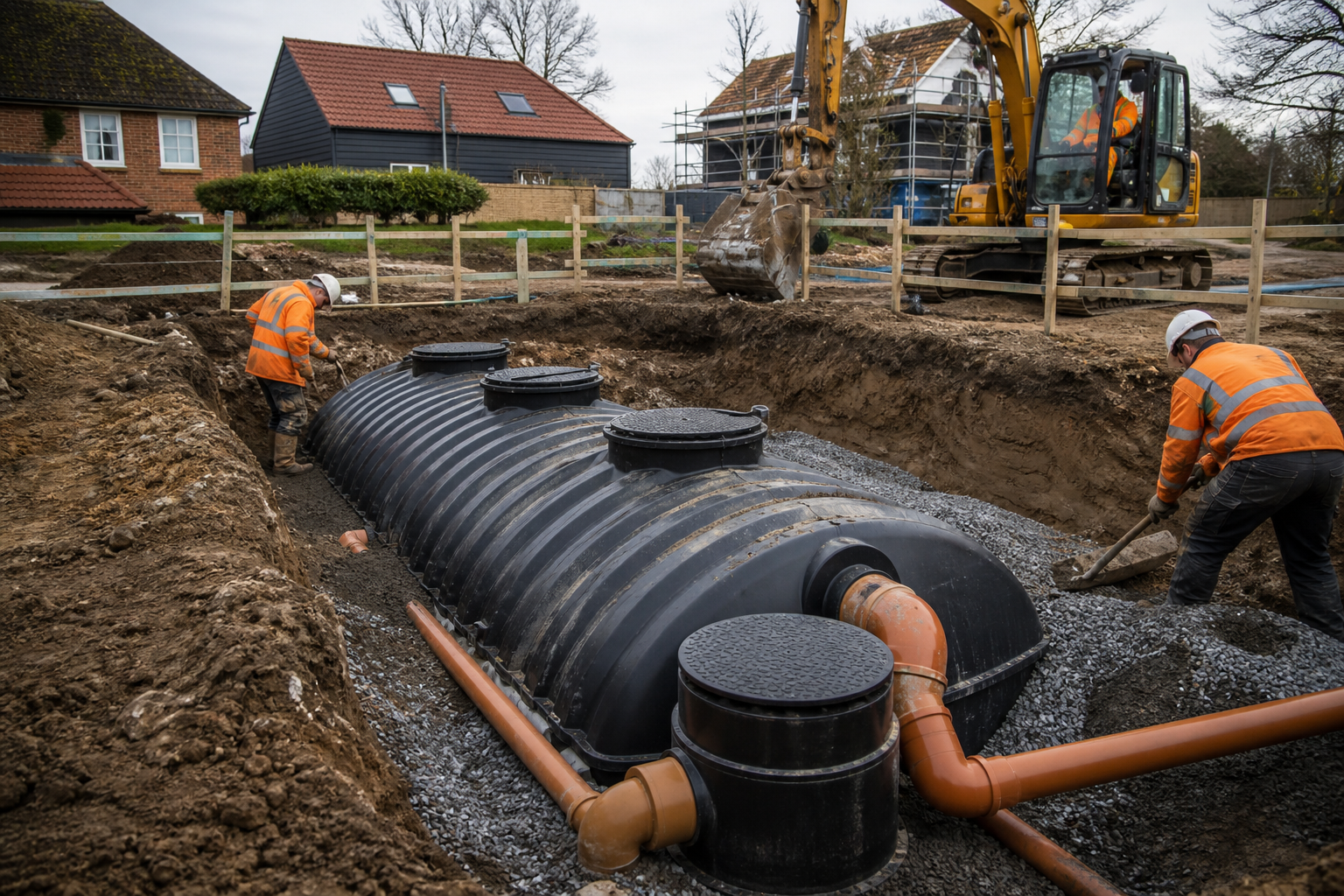
Sewage Treatment Plant Installation in East Sussex: 8 Checks Before Groundworks Begin
If you are planning sewage treatment plant installation in East Sussex, the most important decisions are often made before any ground is broken. The treatment plant itself is only one part of the job. Access, drainage routes, discharge planning, excavation depth and reinstatement all need checking early if you want the installation to run smoothly.
At Kwikfield Construction Limited, we carry out sewage treatment plant installations, drainage works and general groundworks for domestic and commercial clients across East Sussex and beyond. Based in Hailsham, we help clients look at the practical site requirements before machinery arrives, so the project is better planned from the start.
Why the pre-groundworks stage matters
On paper, a sewage treatment plant project can look straightforward. On site, the practical details decide whether excavation, connections and reinstatement go to plan.
Before groundworks begin, we recommend checking:
how wastewater currently leaves the property
whether machinery and materials can reach the installation area
where treated water is expected to discharge
how much excavation and spoil removal will be needed
whether the installation needs to tie in with other drainage or groundwork works
Getting these points clear early helps reduce disruption, makes scheduling easier and gives a better basis for discussing the job with your contractor.
What to check before sewage treatment plant installation in East Sussex
1. Whether a sewage treatment plant is the right solution
Not every site starts from the same position. Some clients are planning a new installation for a property without mains drainage. Others are looking at septic tank replacement or updating an older system before wider building works or a property sale.
The right starting point is understanding the property’s wastewater needs, the number of users and how the new system will connect into the site. This affects plant selection, drainage layout and the scale of the groundworks required.
2. Access for excavation, delivery and spoil removal
A treatment plant installation needs more than space for the unit itself. There must also be practical access for excavation equipment, pipework, aggregates, backfill materials and spoil removal.
Before work starts, look closely at:
gate widths and tight entrances
driveways, lawns or surfaces that machinery may need to cross
slopes, soft ground or restricted turning areas
whether neighbouring features or boundary lines affect working space
Restricted access is one of the most common reasons site plans need to be adjusted once a project is underway.
3. The existing drainage layout
One of the biggest early checks is how the foul water drainage currently runs through the site. If existing pipe routes are unclear, excavation can become more disruptive than expected.
We always advise clients to think beyond the tank location and consider the full route from the property to the new system. That includes existing inspection points, connection positions, pipe runs and any sections of drainage that may need alteration as part of the install.
4. The proposed discharge route
The discharge route matters just as much as the incoming drainage. Depending on the site, treated water may need to leave the plant in a particular direction or connect into a planned outfall arrangement.
This is one of the reasons pre-start planning is so important. The discharge route can influence the plant position, excavation levels and the wider drainage design. If it is treated as an afterthought, the groundworks may need revisiting.
5. Ground levels, falls and excavation depth
Successful wastewater installations depend on levels. The available fall from the property, the position of the treatment plant and the route of the outlet all affect the depth and shape of the excavation.
Ground conditions can also change the approach. Wet ground, awkward levels or limited space around the proposed installation area can all affect how the works are programmed. Across East Sussex, site conditions vary widely, so assumptions made from a plan alone are not always enough.
6. Space for maintenance access after installation
It is easy to focus on the excavation and forget about long-term usability. A sewage treatment plant should be positioned with sensible access for future inspection and maintenance, not hidden in a location that becomes awkward once landscaping or other works are complete.
When reviewing the layout, think about:
safe access to covers and inspection points
whether other planned works will block the area later
how vehicles or equipment may need to reach the system in future
whether the location is practical for the property on a day-to-day basis
7. Nearby structures and underground services
Before excavation starts, it is important to identify anything nearby that could affect the dig. That may include existing buildings, extensions, boundary walls, driveways, hard landscaping, trees and buried services.
Even when the final plant location looks simple on paper, the surrounding site constraints often shape the safest and most efficient way to carry out the groundworks.
8. Reinstatement and linked groundworks
The job does not end when the plant is in the ground. Reinstatement needs to be part of the conversation from the start, especially on live domestic and commercial sites.
It also makes sense to consider whether the installation should be coordinated with other works such as foul water drainage, land drainage, site clearance excavation, foundations or general groundworks. Combining related site work can make access, labour and programming easier to manage.
Common issues that cause avoidable delays
Most hold-ups happen because the early planning stage has been rushed. In our experience, the following points are worth clarifying as early as possible:
Unclear drainage routes: if nobody is certain where existing pipework runs, excavation can slow down while the layout is identified.
Late access concerns: narrow entrances or limited working space can affect machinery choice and the installation plan.
Plant position changes: moving the location late in the process can alter levels, pipe runs and discharge planning.
Overlooked reinstatement: disturbed surfaces, removed spoil and final finishing need planning, not last-minute decisions.
Disconnect between trades: if drainage, excavation and groundwork elements are treated separately, the site can become harder to coordinate.
This is why many clients choose a contractor who understands the full groundwork picture rather than only the equipment being installed.
How we approach sewage treatment plant projects across East Sussex
At Kwikfield Construction Limited, we specialise in sewage treatment plant installations alongside drainage and general groundwork work. Based in Hailsham, we work with domestic and commercial clients across East Sussex and typically cover a wider 50 to 60 mile radius where required.
Because we carry out sewage treatment plant installation as part of broader site works, we look at the practical details that affect the whole project, not just the tank itself.
That can include drainage and groundwork services, foul water drainage, excavation access, spoil removal and coordination with other site activity. Where an older system is involved, we can also discuss the groundwork needed for septic tank replacement and excavation works.
Over more than five years, we have built our reputation on dependable specialist work. If you are planning an installation for a home, commercial premises or wider site project, starting the conversation before groundworks begin usually leads to a clearer and more efficient plan.
FAQs
What should I check before sewage treatment plant installation in East Sussex?
Start with access, the existing drainage layout, the likely discharge route, excavation levels and the space available for both installation and future maintenance. Those points usually shape the groundwork scope more than clients expect.
Can a septic tank be replaced with a sewage treatment plant?
In many cases, property owners look at a sewage treatment plant when an older septic tank needs replacing. The practical question is how the new system will fit the site, connect into existing drainage and work with the required groundworks.
Do you work on domestic and commercial sewage treatment plant installations?
Yes. We take on both domestic and commercial installations, depending on the project, and we work across East Sussex and beyond from our Hailsham base.
How early should I speak to a contractor about groundworks?
As early as possible. The sooner access, levels, drainage routes and linked site works are reviewed, the easier it is to plan the excavation and avoid changes once machinery is booked.
Can you help with drainage and excavation as well as the treatment plant?
Yes. Our work includes sewage treatment plant installation, drainage, foul water drainage, site clearance excavation and general groundworks, which helps clients keep related site works joined up.
Conclusion
If you are planning sewage treatment plant installation in East Sussex, do not wait until the dig date to ask the important site questions. Access, drainage layout, discharge planning, excavation depth and reinstatement all deserve attention before groundworks begin.
Kwikfield Construction Limited can talk through your site requirements and the associated groundworks needed for a practical installation. To discuss your project, call 01273 257204, email Info@kwikfieldconstruction.com or contact Kwikfield Construction Limited through our website.