Land Drainage Installation in East Sussex: 7 Signs Your Garden, Driveway or Site Needs a Proper Drainage Solution

If you are searching for land drainage installation East Sussex, it is usually because water is sitting where it should not. A garden stays boggy, puddles collect on a driveway, or a working site becomes difficult to use after rainfall. Those symptoms are more than an inconvenience. They often show that surface water is not moving away from the area properly.
At Kwikfield Construction Limited, we carry out land drainage installation, drainage works and general groundworks for domestic and commercial clients across East Sussex and beyond. Based in Hailsham, we assess the practical causes behind poor runoff so the drainage solution fits the site, the access and the wider groundworks involved.
If the problem is affecting landscaping, excavation or access, our drainage and groundwork services can often be planned together rather than treated as separate issues. Below are seven common signs that it is time to arrange a proper site visit.
7 signs you need land drainage installation in East Sussex
1. Standing water stays on the surface long after rain
This is one of the clearest warning signs. If water sits for hours or even days after rainfall, the ground or existing drainage is probably not coping as it should.
On domestic properties, that may show up as persistent puddles on lawns, driveways or paths. On commercial sites, it can affect access, storage areas and day-to-day use of the space.
2. Parts of the garden remain soft, soggy or unusable
A lawn that never properly dries out is not always just a seasonal issue. If certain areas feel consistently wet underfoot, the problem may be poor drainage below the surface rather than the weather alone.
When ground stays saturated, the space becomes harder to use and harder to maintain. That is often when property owners start looking at a more permanent drainage solution instead of repeated short-term fixes.
3. Water pools on your driveway, path or access route
Driveways and hard surfaces can make drainage problems more obvious because runoff has fewer places to go. If water collects near entrances, along the edge of paving or across an access route, the levels or drainage layout may need attention.
In many cases, the issue is not just the surface itself. It is how water is being directed across the wider area and whether the existing drainage route is suitable for the site.
4. Soil, gravel or surface finishes keep washing out
When water repeatedly runs across a surface instead of draining away properly, it can start moving loose material with it. Gravel shifts, edges become untidy and softer areas can begin to wear away.
This is a common sign that runoff is following the wrong path. A proper land drainage approach looks at where the water is coming from, where it should go, and how the site needs to be shaped or drained to manage it better.
5. Excavations or work areas keep filling with water
If you are preparing for building work, extensions, external alterations or general site activity, poor drainage can become obvious very quickly. Trenches, excavations and low areas can collect water faster than expected, making progress more difficult.
That is why drainage should be looked at early when planning wider external works. As a groundworks contractor in East Sussex, we often find that drainage needs to be considered alongside excavation, access and reinstatement rather than left until later.
6. You are dealing with the same drainage issue again and again
Repeated clearing, patch repairs or surface tidy-ups may deal with the symptom for a while, but they do not always solve the cause. If the same area keeps flooding, holding water or becoming waterlogged, it usually means the underlying drainage arrangement needs a closer look.
Not every recurring problem calls for a large installation, but recurring problems do justify a proper assessment. The aim is to understand whether repair, regrading or a new land drainage setup is the sensible next step.
7. You are already planning landscaping, driveway or site works
Sometimes the best sign is not the severity of the problem, but the timing. If you already know you are carrying out external works, it often makes sense to address drainage while access, excavation and reinstatement are already part of the plan.
This can apply to residential gardens, driveway and pathway works, commercial sites and new build preparation. Dealing with drainage at the right stage can make the overall project more straightforward and more joined up.
What causes drainage problems on gardens, driveways and sites?
Drainage issues rarely come from one factor alone. In many cases, several practical site conditions are contributing at the same time.
Poor falls or levels: water naturally moves to the lowest point, so even small changes in levels can create persistent pooling.
Compacted ground: heavily used or disturbed ground may not let water pass through or away effectively.
Hard surfaces: driveways, paths and work areas can increase surface runoff and expose weaknesses in the drainage layout.
Older or inadequate drainage: existing systems may no longer suit how the site is being used.
Changes to the property: extensions, landscaping, new access routes or external works can alter how water moves across the plot.
Linked groundwork issues: drainage problems are often tied to excavation, reinstatement and the wider layout of the site.
This is why a site visit matters. The right answer is not to assume every wet area needs the same installation, but to understand how water is moving across that specific property or site.
What a proper drainage solution should achieve
A good drainage solution should do more than move water from one obvious puddle to another. It should work with the site as a whole.
Relieve the area where water is causing the problem
Suit the way the space is actually used, whether domestic or commercial
Fit with the ground levels, access and practical installation route
Coordinate with any related excavation or groundwork requirements
Allow for tidy reinstatement once the installation work is complete
Depending on the site, that may involve new land drainage, drainage installation repairs or wider groundwork changes. The best approach depends on the ground conditions and the purpose of the area.
How we approach land drainage installation projects
At Kwikfield Construction Limited, we take a practical first approach. We look at the site conditions before recommending the work, because drainage only performs well when the installation matches the ground it is going into.
We assess the symptoms on site. We look at where water is collecting, how long it remains, and how the area is being used.
We review levels, access and the surrounding layout. That includes how the site can be reached, where excavation may be needed and how drainage ties into the rest of the plot.
We consider the wider works. Drainage is often easier to plan when it is coordinated with other external works rather than treated in isolation.
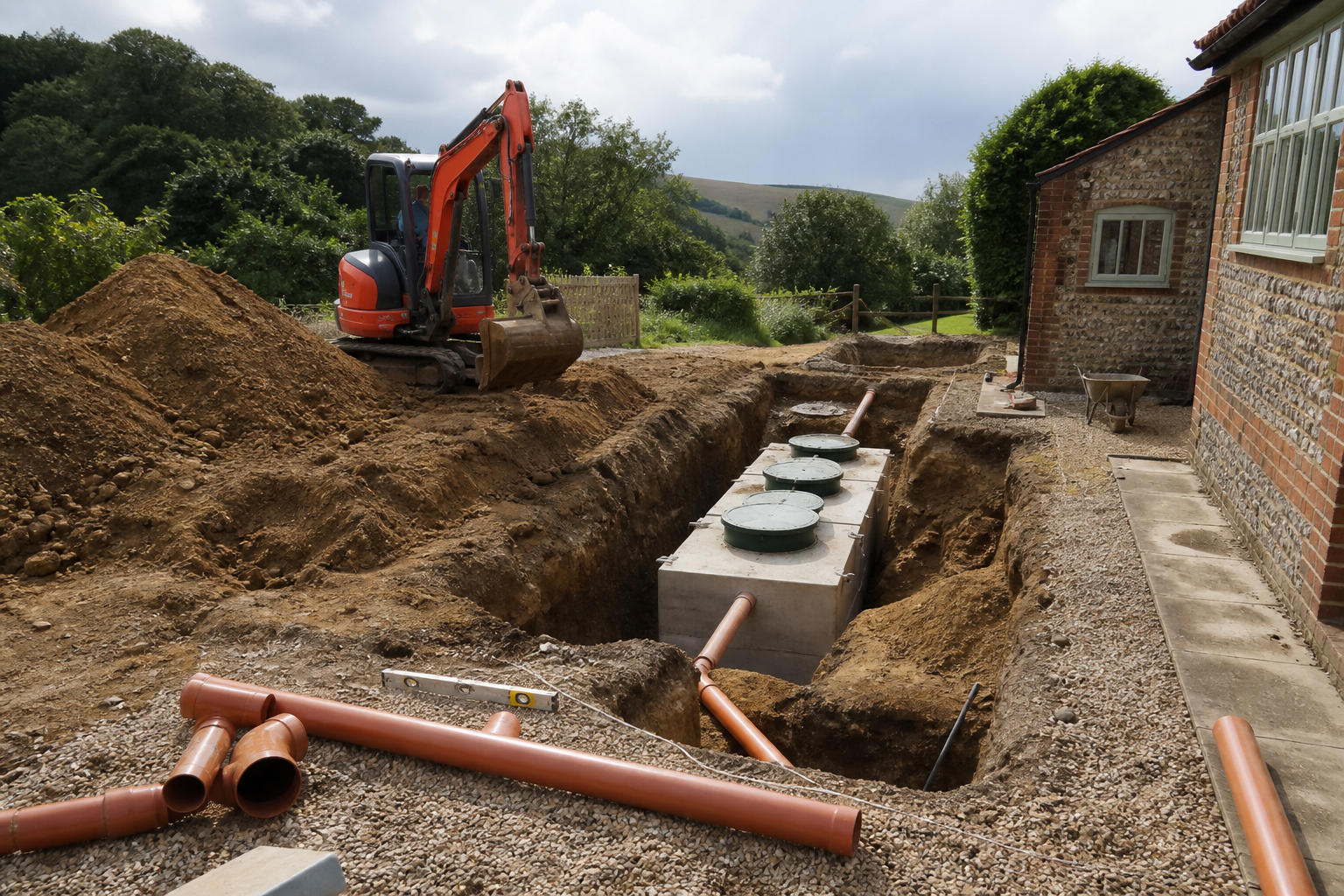
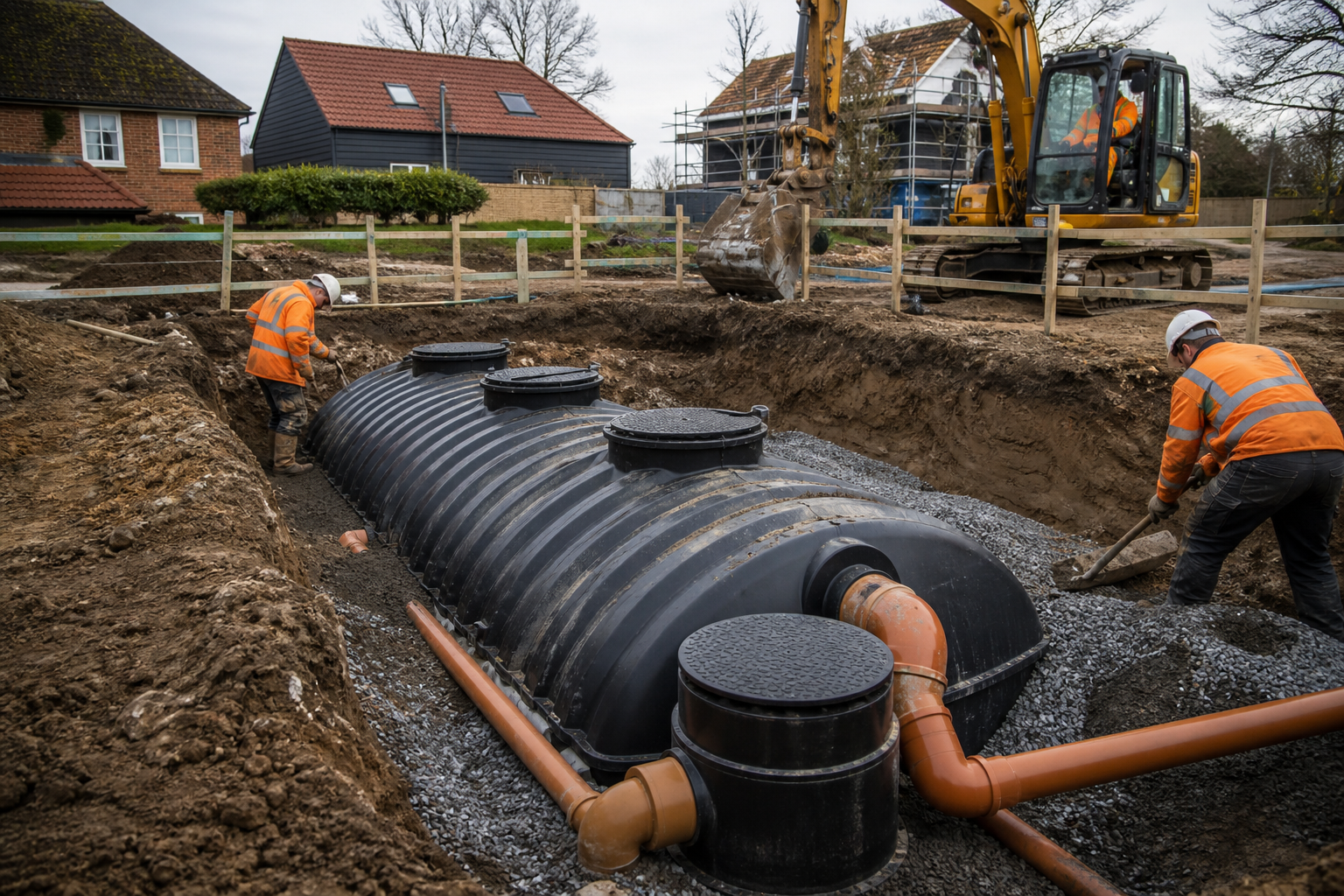
We carry out the drainage and associated groundworks. This may involve excavation, installation work and related drainage or groundwork tasks suited to the project.
We reinstate the area as part of the overall job. A proper finish matters, especially on domestic gardens, driveways and visible external spaces.
Where needed, we can coordinate drainage with site clearance, excavation and general groundworks, helping clients plan the project as one joined-up package rather than a series of separate jobs.
Why arranging a site visit early is usually the better move
Water problems tend to affect more than one part of a property or site. Left too long, they can start interfering with access, planned works and the day-to-day use of the space.
Before a driveway project: it is sensible to understand runoff before resurfacing or altering levels.
Before landscaping: there is little value in finishing a garden if drainage problems underneath remain unresolved.
Before building or groundwork works: drainage should be considered alongside excavation, foundations and footings where relevant.
When the issue keeps returning: repeated symptoms usually mean it is time for a more thorough assessment.
Early planning does not mean assuming the biggest possible scheme. It means giving yourself time to look at the site properly and choose a solution that fits. If drainage issues are already affecting upcoming works, our driveway, pathway and wider groundwork services can often be discussed at the same time.
FAQs about land drainage installation in East Sussex
How do I know whether I need land drainage installation or a smaller repair?
If the problem is recurring, affecting a wide area or tied to the overall levels of the site, a fuller land drainage solution may be needed. If it is limited to one part of an existing system, a repair may be enough. A site visit is the best way to judge which is more appropriate.
Can land drainage help with a wet garden or lawn?
Yes, it can help where the issue is poor movement of water across or through the ground. The right approach depends on the layout, the surrounding surfaces and how the rest of the site drains.
Can drainage work be combined with driveway or groundwork projects?
In many cases, yes. It is often practical to review drainage when planning driveway and pathway groundworks, excavation, site preparation or other external works, especially if access and reinstatement are already part of the project.
Do you carry out domestic and commercial drainage work?
Yes. We work for both domestic and commercial clients across East Sussex and beyond, typically within a 50 to 60 mile radius from our Hailsham base.
Which areas do you cover?
We are based in Hailsham and work across East Sussex and beyond. Areas served include Hailsham, Eastbourne, Hastings and Crowborough, along with surrounding locations depending on the project.
Conclusion
If your garden, driveway or site is showing any of these signs, a proper drainage assessment is the sensible next step. Standing water, soggy ground and poor runoff rarely improve on their own, and the right time to address them is often before they begin affecting wider works.
Based in Hailsham, Kwikfield Construction Limited provides land drainage installation, drainage works and groundworks for domestic and commercial clients across East Sussex and beyond. To arrange a site visit with Kwikfield Construction Limited, call 01273 257204, email Info@kwikfieldconstruction.com or contact us through our website.